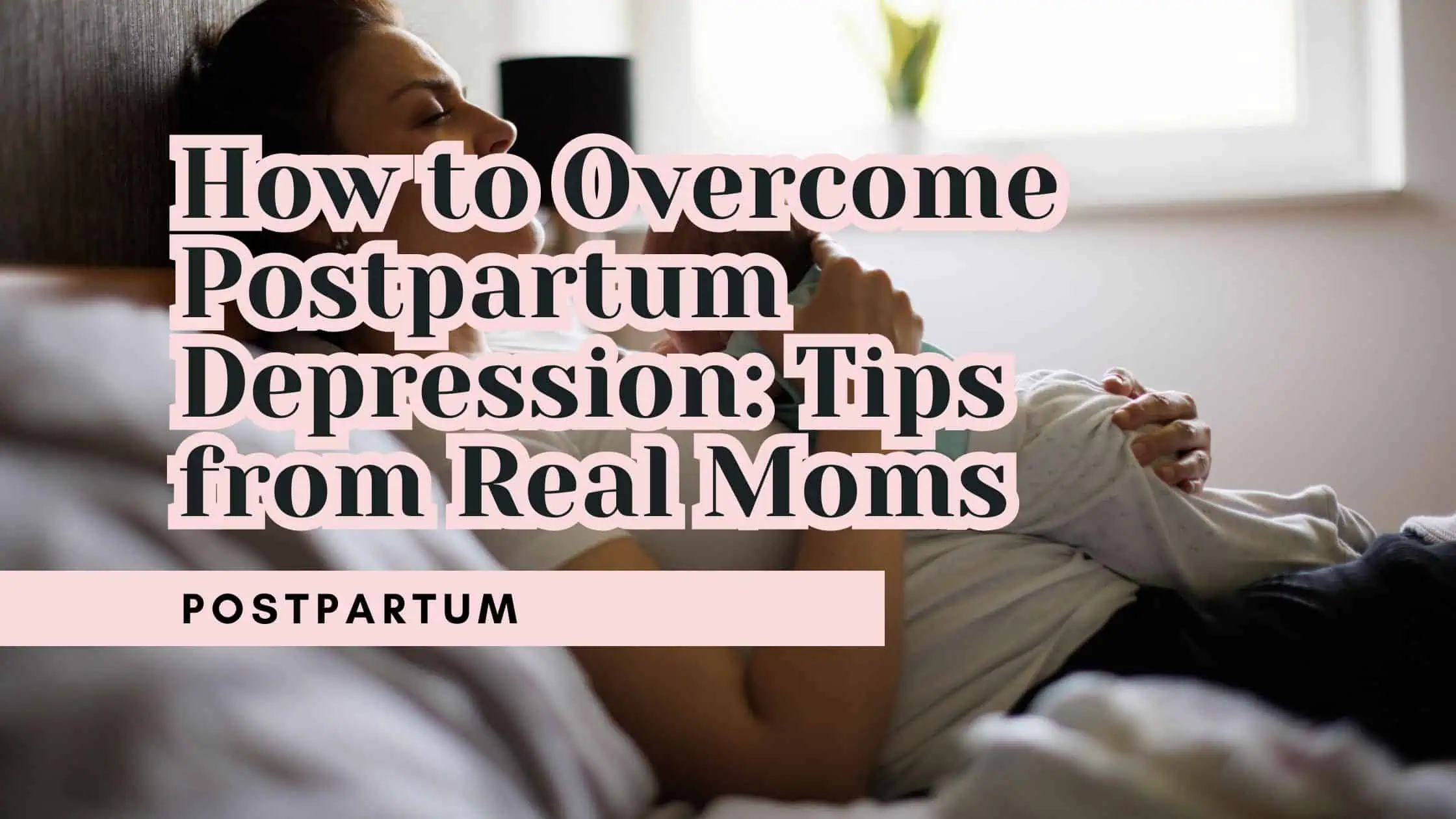
How to Overcome Postpartum Depression: Tips from Real Moms
(Hey! Some links in this post may be affiliate links — meaning I may earn a small commission if you buy through them, at no extra cost to you. As an Amazon Associate, I earn from qualifying purchases. I only share products I genuinely love and think you’ll find useful too. Read the full disclosure here).
You’ve been staring at the same load of laundry for 20 minutes. You know you should fold it. You know your baby needs a bath. You know dinner won’t cook itself. But none of it matters because there’s this fog between you and everything that used to feel normal, and you can’t remember the last time you felt like yourself. If that’s where you are right now, you’re not broken — and you’re definitely not alone.
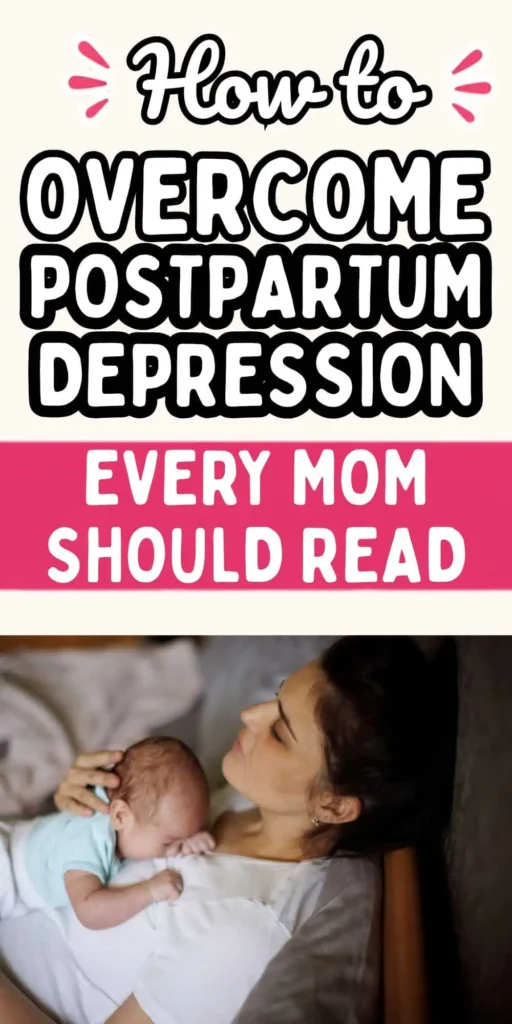
Postpartum depression isn’t just “baby blues on steroids.” It’s a real, medical condition that affects up to 1 in 5 new moms, and it doesn’t care how prepared you were or how much you wanted this baby. The good news? It’s treatable, and thousands of moms have walked this path before you. Here’s what actually helped them climb out.
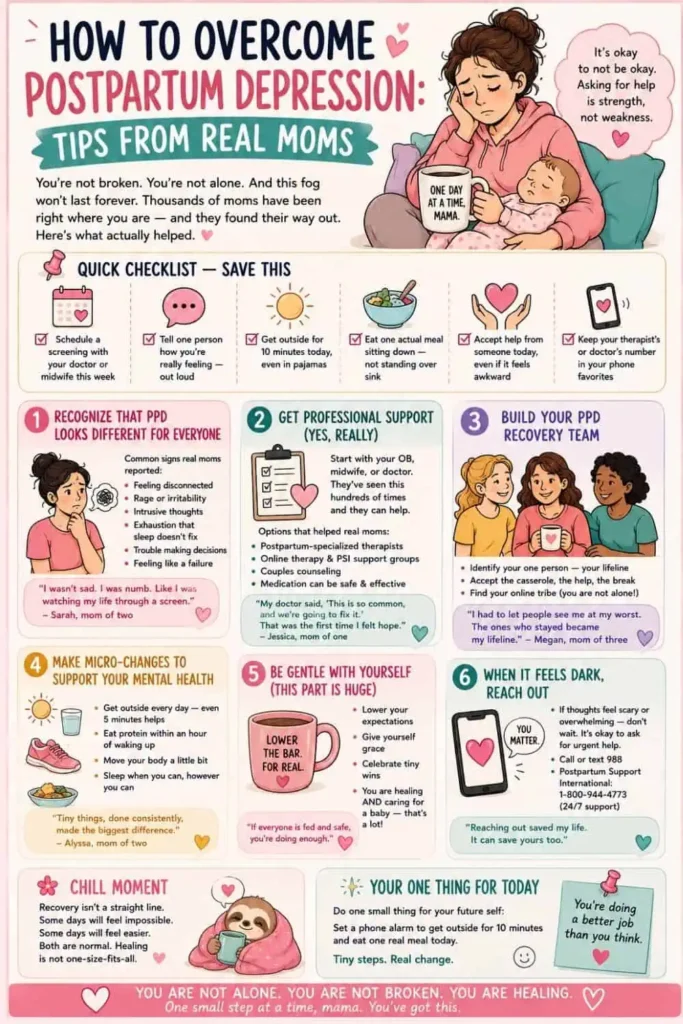
📌 Quick Checklist — Save This
- ✅Schedule a screening with your doctor or midwife this week
- ✅Tell one person how you’re really feeling — out loud
- ✅Get outside for 10 minutes today, even in pajamas
- ✅Eat one actual meal sitting down — not standing over sink
- ✅Accept help from someone today, even if it feels awkward
- ✅Keep your therapist’s or doctor’s number in your phone favorites
Recognize That Postpartum Depression Looks Different for Everyone
Here’s what nobody tells you: postpartum depression doesn’t always look like crying in the shower. Sometimes it’s rage at your partner for breathing too loud. Sometimes it’s feeling absolutely nothing when your baby smiles. Sometimes it’s intrusive thoughts that scare you so much you can’t tell anyone.
Sarah, mom of two, described it like this: “I wasn’t sad. I was numb. Like I was watching my life through a screen. Everyone kept saying I seemed fine, and that made it worse.”
Common signs real moms reported:
- Feeling disconnected from your baby even while going through all the motions
- Rage or irritability that feels way out of proportion to what’s happening
- Scary intrusive thoughts (having them doesn’t mean you’ll act on them — they’re a symptom)
- Physical exhaustion that sleep doesn’t fix
- Inability to make decisions, even tiny ones like what to eat
- Feeling like you’ve made a terrible mistake or that your baby would be better off without you
If you’re reading this list and nodding, that recognition is actually the first step. You’re not imagining it, and it’s not your fault.
Get Professional Support for Postpartum Depression (Yes, Really)
Let’s address the elephant in the room: asking for help feels impossible when you can barely function. But every single mom who recovered from postpartum depression said this was non-negotiable.
Start with your OB, midwife, or primary care doctor. They’ve seen this hundreds of times. Most will do a simple screening questionnaire, and many can prescribe medication or refer you to a therapist who specializes in postpartum mood disorders.
“I was terrified they’d think I was a bad mom,” says Jessica, who developed postpartum depression after her first baby. “Instead, my doctor said, ‘This is so common, and we’re going to fix it.’ That was the first time I felt hope in weeks.”
Therapy options that helped real moms:
- Postpartum-specific therapists who understand the unique challenges of new motherhood
- Online therapy platforms like Postpartum Support International’s provider directory
- Support groups where you can talk to other moms going through it (PSI has free weekly Zoom groups)
- Couples counseling if your relationship is taking a hit (it usually does)
And yes, medication is an option. Many antidepressants are safe for breastfeeding, and choosing to take medication doesn’t make you weak — it makes you smart enough to use the tools available.

Build Your Postpartum Depression Recovery Team
You can’t think your way out of postpartum depression alone. You need people. Not “let me know if you need anything” people — actual humans who show up.
Here’s what worked for moms who’ve been there:
Identify your one person. This is the friend or family member you can text at 2am when the thoughts get dark. Someone who won’t try to fix you, just listen. Tell them explicitly: “I need you to check on me every few days, even if I say I’m fine.”
Accept the casserole. When someone offers help, say yes. Yes to the meal. Yes to holding the baby while you shower. Yes to someone folding that laundry you’ve been staring at. Pride doesn’t help postpartum depression — lasagna does.
Find your online tribe. Private Facebook groups and Reddit communities like r/postpartum connect you with moms who get it. At 3am when you feel completely alone, you can post and someone will respond. That matters more than you’d think.
Megan, who recovered from severe postpartum depression, put it this way: “I had to let people see me at my worst. That was terrifying. But the ones who stayed became my lifeline.”
Make Micro-Changes to Support Your Mental Health
When you’re in the thick of postpartum depression, “self-care” advice can feel insulting. You can’t bubble bath your way out of this. But tiny, specific actions actually do help your brain chemistry recover.
Get outside every single day. Even five minutes on the porch counts. Sunlight affects your circadian rhythm and serotonin production. Bundle the baby in the stroller and walk to the mailbox. That’s enough.
Eat protein within an hour of waking up. Your brain needs fuel to make neurotransmitters. Greek yogurt, a hard-boiled egg, peanut butter on toast — anything counts. One mom kept string cheese on her nightstand.
Move your body, even a little. You don’t need a workout plan. Put the baby in a carrier and walk around your house. Do squats while you bounce a fussy baby. Gentle yoga videos on YouTube. Movement helps, even when it feels pointless.
Sleep when you can, however you can. Yes, everyone says this. But postpartum depression gets dramatically worse with sleep deprivation. If that means formula feeding at night so your partner can take a shift, do it. If it means bed-sharing safely so you get more rest, do it. Sleep is medicine.

Handle Intrusive Thoughts About Postpartum Depression
This is the part most articles skip, but it’s what moms desperately need to hear: intrusive thoughts are a symptom, not a prediction. They don’t mean you’re dangerous. They mean your brain is struggling.
Intrusive thoughts might look like:
- Images of accidentally dropping the baby
- Fears about something terrible happening to your child
- Thoughts about harming yourself
- Obsessive worries about SIDS, choking, or other dangers
Here’s what helped moms cope:
Tell your therapist or doctor immediately. They need to know. These thoughts often respond really well to treatment, and keeping them secret makes them worse.
Don’t try to suppress them. The more you fight intrusive thoughts, the stickier they become. Notice them, remind yourself they’re symptoms, and let them pass through. “Oh, there’s that scary thought again. It’s just my brain misfiring.”
Know the difference between intrusive thoughts and plans. Intrusive thoughts are unwanted and distressing. If you’re making actual plans to harm yourself or your baby, that’s a crisis — call 988 (Suicide & Crisis Lifeline) or go to the ER. There’s no shame in that. It’s the brave thing to do.
Lauren, who experienced intrusive thoughts with her second baby, says: “Once I told my therapist, she normalized it so fast. She said, ‘Your brain is trying to protect your baby by imagining every possible danger. It’s overdoing it, but the intention is love.’ That reframe helped me stop spiraling.”
Give Yourself Time to Overcome Postpartum Depression
Recovery isn’t linear. Some days you’ll feel almost normal, and then you’ll have a terrible day and think you’re back at square one. You’re not. That’s just how healing works.
Most moms start feeling noticeably better within 4-6 weeks of starting treatment, but full recovery can take months. That’s not failure — that’s your brain literally rebuilding neural pathways.
Track your progress in tiny ways:
- Did you shower today? That’s progress.
- Did you smile at your baby once? Progress.
- Did you ask for help? Huge progress.
- Did you survive today? That counts. That really counts.
Set reminders to reassess every two weeks. Write down three things that are slightly better than they were. The improvements are small at first, but they’re real.
“I didn’t wake up one day and feel cured,” says Rachel, who recovered from postpartum depression eight months after her daughter was born. “But I realized one day that I’d laughed. Like, really laughed. And I couldn’t remember the last time that happened. That’s when I knew I was coming back.”
Know What to Do If Postpartum Depression Gets Worse
Sometimes, despite everything you’re doing, things get worse instead of better. That doesn’t mean you failed — it means you need more support, faster.
Go to the ER or call 988 if:
- You have a plan to harm yourself or your baby
- You’re hearing voices or seeing things that aren’t there
- You feel completely unable to care for yourself or your baby
- You feel detached from reality
Call your doctor urgently if:
- Your symptoms are getting worse despite treatment
- You can’t eat or sleep at all
- You’re having panic attacks
- You feel hopeless about ever getting better
Some moms need intensive outpatient programs or even short-term inpatient care. That’s not giving up — that’s getting the level of help you need to recover. Many hospitals now have mother-baby units where you can stay together while you get treatment.
🌸 Chill Moment
You’re reading this article because you’re trying, and that trying matters even when it doesn’t feel like enough. The fact that you’re here, looking for help, means you haven’t given up — and that’s the only thing you need to do today.
Your one thing for today
Text one person right now: “I’m struggling with postpartum depression and I need support.” You don’t need to explain more than that. Just send it.
Conclusion
There’s a moment — and you won’t see it coming — when you’ll realize you went a whole hour without feeling heavy. Then a whole morning. Then you’ll catch yourself singing to your baby without forcing it, and you’ll think, “Oh. There I am.” That moment is coming for you, even if you can’t imagine it right now. Getting help isn’t admitting defeat; it’s refusing to let postpartum depression steal more days than it already has. Save this article for later — you might need to come back to it on hard days. And when you’re ready, check out our posts on postpartum anxiety and building your support system, because this whole overwhelming season gets easier when you’re not doing it alone.