19 Breastfeeding Tips and Hacks for New Moms
(Hey! Some links in this post may be affiliate links — meaning I may earn a small commission if you buy through them, at no extra cost to you. As an Amazon Associate, I earn from qualifying purchases. I only share products I genuinely love and think you’ll find useful too. Read the full disclosure here).
I’ll never forget the first time I tried breastfeeding. I was sitting in that hospital bed at 2 a.m., my baby screaming, my nipples already sore, and I was absolutely convinced I was doing everything wrong. The lactation consultant had made it look so easy during her visit, but now that she was gone? Total chaos.

Here’s the thing nobody tells you: breastfeeding is natural, but that doesn’t mean it’s automatically easy. It’s a learned skill for both you and your baby, and honestly? You’re both beginners figuring it out together.
I’ve gathered the most practical, real-world breastfeeding tips that actually made a difference for me and countless other moms. No judgment, no pressure—just honest help for those early days (and weeks, and months) when you need it most.
Get Your Latch Right from Day One
Your latch is everything. Seriously, a good latch prevents most of the painful issues new moms face, and it makes sure your baby’s actually getting milk efficiently.
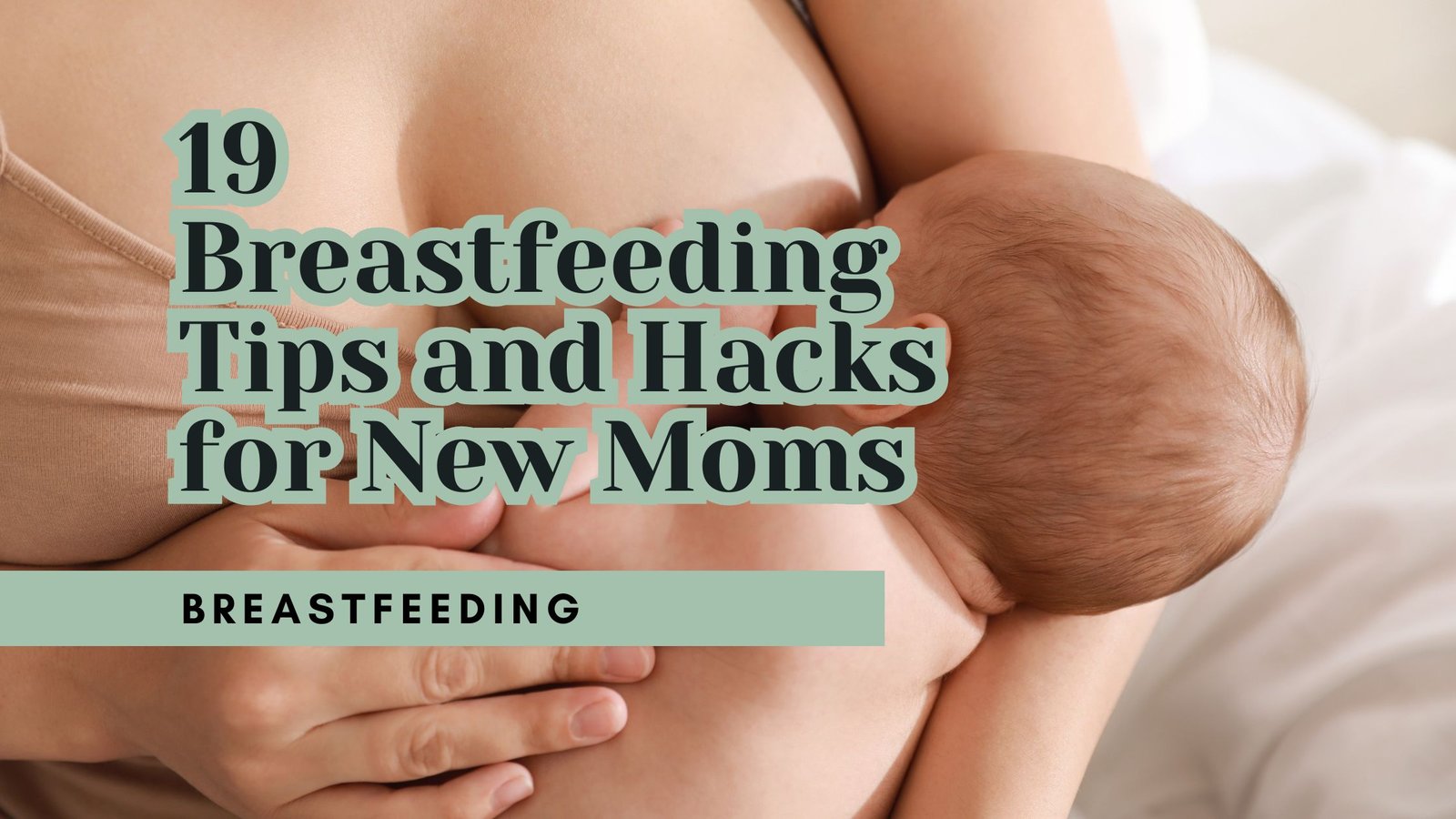
Here’s what a good latch looks like: your baby’s mouth is wide open (think baby bird), their lips are flanged out like little fish lips, and you see more of your areola above their top lip than below. Your nipple should be pointing toward the roof of their mouth, not straight in.
The trick nobody told me: wait for your baby to open really wide before latching them on. Tickle their upper lip with your nipple until they open like they’re yawning, then bring them to you quickly. Don’t lean forward to meet them—bring baby to breast, not breast to baby.
Stock Your Breastfeeding Station Before You Need It
Trust me on this—set up your feeding spots before your baby arrives. You’ll be spending hours in these places, so make them comfortable and keep everything within arm’s reach.
Here’s what you actually need nearby:
- A large water bottle (you’ll be so thirsty, it’s wild)
- Healthy snacks that you can eat one-handed
- Your phone charger
- Burp cloths and a small towel
- Nipple cream (lanolin or coconut oil)
- The TV remote or a good book
I had stations in three places: my bed, the couch, and the nursery chair. Game changer for those middle-of-the-night feeds when you’re half asleep and don’t want to search for anything.

Master the Football Hold for Better Control
The cradle hold gets all the attention, but the football hold (also called clutch hold) was my secret weapon, especially in the beginning. It gives you way more control over your baby’s head position and lets you see exactly what’s happening with the latch.
Tuck your baby under your arm on the same side you’re feeding from, with their feet pointing toward your back. Support their head with your hand and bring them to your breast. This position is especially helpful if you had a C-section because baby isn’t lying across your incision.
Plus, it’s amazing for twins if you’re feeding both at once. But that’s a whole different level of multitasking!
Use the “Breast Sandwich” Technique
This sounds weird but stick with me. When your breasts are really full (hello, engorgement), they can be too round for your baby to latch onto easily. The solution? Make a breast sandwich.
Cup your breast with your hand in a C-shape, with your thumb on top and fingers underneath, parallel to your baby’s lips. Gently compress to make your breast more oval-shaped—like a sandwich you’re about to take a bite of. This makes it easier for your baby to get a deep latch.
Keep your fingers well behind your areola so they don’t get in the way. This little hack saved me so much frustration during those early engorged days.

Breastfeeding Tips for Increasing Your Milk Supply
Worried about your supply? You’re not alone. Most moms stress about this at some point, but here’s the truth: if your baby has enough wet diapers and is gaining weight, you’re probably doing just fine.
That said, here are proven ways to boost supply when you actually need to:
- Feed frequently: Aim for 8-12 times in 24 hours. Your breasts work on supply and demand—the more you remove milk, the more you make.
- Power pump: Once a day, pump for 20 minutes, rest 10 minutes, pump 10 minutes, rest 10 minutes, pump 10 minutes. This mimics cluster feeding.
- Don’t skip night feeds: Prolactin (the milk-making hormone) is highest at night.
- Stay hydrated: Drink when you’re thirsty, but don’t force it. Overhydrating doesn’t increase supply.
- Check your latch: A shallow latch means inefficient milk removal, which signals your body to make less.
Also, oatmeal for breakfast became my ritual. Does it scientifically increase supply? The research is mixed. Did it make me feel like I was doing something helpful? Absolutely.
Survive Cluster Feeding Without Losing Your Mind
Around week two, my baby suddenly wanted to nurse constantly for hours. I panicked, thinking my milk had disappeared. Nope—just cluster feeding, which is totally normal and actually helps increase your supply.
Cluster feeding usually happens in the evenings and during growth spurts (around 3 weeks, 6 weeks, 3 months). Your baby isn’t broken, and you’re not failing. They’re literally ordering more milk for their growing body.
Survival tips: Set up camp on the couch with snacks, water, and Netflix. Lower your expectations for the evening—dinner might be cereal, and that’s okay. Tag in your partner for diaper changes and baby-wearing between feeds.
This phase passes, I promise. Usually within a few days, your supply adjusts and things calm down again.

Smart Breastfeeding Hacks for Nighttime Feeds
Night feeds are exhausting, but a few tricks make them more bearable. First, keep the lights dim—use a small nightlight or your phone’s lowest brightness. Bright lights wake you (and baby) up too much.
Side-lying nursing changed my life once I got the hang of it. You both lie on your sides facing each other, and baby nurses while you rest. Make sure you’re following safe sleep guidelines, though—if there’s any chance you’ll fall asleep, baby should be moved to their own sleep space.
I also started doing diaper changes before feeding, not after. If baby falls asleep nursing, you don’t have to wake them up with a diaper change. Unless it’s a poop situation—then all bets are off.
Breastfeeding Tips for Managing Sore Nipples
Sore nipples are common in the first week or two as you both figure things out. But if you’re dreading every feed because of pain, something needs to adjust—usually the latch.
Here’s what actually helps:
- Express a little milk and rub it on your nipples after feeding—it’s healing and antibacterial
- Let your nipples air dry before putting your bra back on
- Use nipple cream after every feed (I loved lanolin)
- Try different positions to vary the pressure points
- If one side is really sore, start on the less sore side and switch once let-down happens
If your nipples are cracked, bleeding, or the pain isn’t improving after two weeks, please see a lactation consultant. That’s not normal “getting used to it” pain—something needs fixing.
Keep a Simple Feeding Log (Or Don’t)
In those first sleep-deprived weeks, I couldn’t remember which breast I’d last fed from, let alone what time. Some moms love detailed tracking apps. Others find them stressful.
If tracking helps you feel in control, go for it. Apps like Huckleberry or Baby Tracker are great. But if you’re just moving a hair tie from wrist to wrist to remember which side is next? That works too.
After the first few weeks when you’re establishing supply and making sure baby’s getting enough, you can often relax the tracking. Your body and baby will find their rhythm.
Learn to Nurse in Public Confidently
Your first time nursing outside your house can feel intimidating. I practically built a fort with my nursing cover and still felt like everyone was staring. Spoiler: they weren’t.
Practice at home in front of a mirror so you can see what others see (which is usually nothing). Wear a nursing tank under a regular shirt—lift the top shirt up, pull the tank down, and you’ve got built-in coverage.
Nursing covers are great if they make you feel comfortable, but they’re not required. A light blanket or just positioning baby strategically works too. And honestly? After a few weeks, most moms get so efficient that nobody even notices what’s happening.
Know your rights: In all 50 states, you have the legal right to breastfeed anywhere you’re allowed to be. Anyone who has a problem with it can take it up with the law.
Handle Engorgement Like a Pro
When your milk comes in around day 3-5, your breasts might feel like painful rocks. Engorgement is uncomfortable but temporary—usually resolving within 24-48 hours as your supply regulates.
The best relief? Frequent nursing. Feed your baby as often as they’ll eat. Between feeds, use cold compresses (frozen peas in a towel work great). Before feeding, use warmth and gentle massage to help milk flow.
If you’re so engorged that baby can’t latch, hand express or pump just enough to soften your areola. Don’t empty your breasts completely with a pump, though—that signals your body to make even more milk.
Know When to Pump (and When Not To)
Pumping isn’t required for successful breastfeeding, but it’s super helpful if you’re going back to work, want to build a freezer stash, or need your partner to handle a feeding.
Wait until breastfeeding is well-established (usually 3-4 weeks) before introducing a pump regularly. Pumping too early can lead to oversupply issues. Once a day is plenty to start building a stash.
Best time to pump? First thing in the morning when your supply is highest, or about an hour after a feeding. And remember: what you pump isn’t an accurate measure of your supply. Babies are way more efficient than pumps.
Take Care of Your Own Body Too
You can’t pour from an empty cup, and breastfeeding takes real energy from your body. You need about 300-500 extra calories per day—which sounds great until you realize you’re also too tired to cook.
Keep it simple: protein-rich snacks, plenty of water, and don’t stress about eating perfectly. Your body is amazing at making milk even when your diet isn’t Instagram-worthy.
Also, be gentle with yourself about your postpartum body. Breastfeeding burns calories, but some women hold onto weight while nursing because of hormones. Both scenarios are normal.
🌸 Chill Moment
If breastfeeding feels hard right now, that doesn’t mean you’re doing it wrong. It means you’re learning something completely new while running on zero sleep, and that’s genuinely difficult.
Your one thing for today
Take one deep breath before your next feeding and remind yourself that both you and your baby are doing your best.
You’re Doing Better Than You Think
Here’s what I wish someone had told me in those early days: there’s no perfect way to breastfeed. There’s only your way, the way that works for you and your baby.
Some of these breastfeeding tips will resonate with you, others won’t apply to your situation, and that’s completely okay. Take what helps, leave what doesn’t, and trust yourself to figure out what your baby needs.
And if breastfeeding doesn’t work out despite your best efforts? Fed is best, always. Your worth as a mother has absolutely nothing to do with how your baby gets their nutrition.
Save this for later when you need a quick reminder or want to try a new position. And if you’re dealing with going back to work soon, check out our guide on pumping at work—because that’s a whole new adventure with its own set of tips and tricks.
You’ve got this, mama. One feed at a time.