
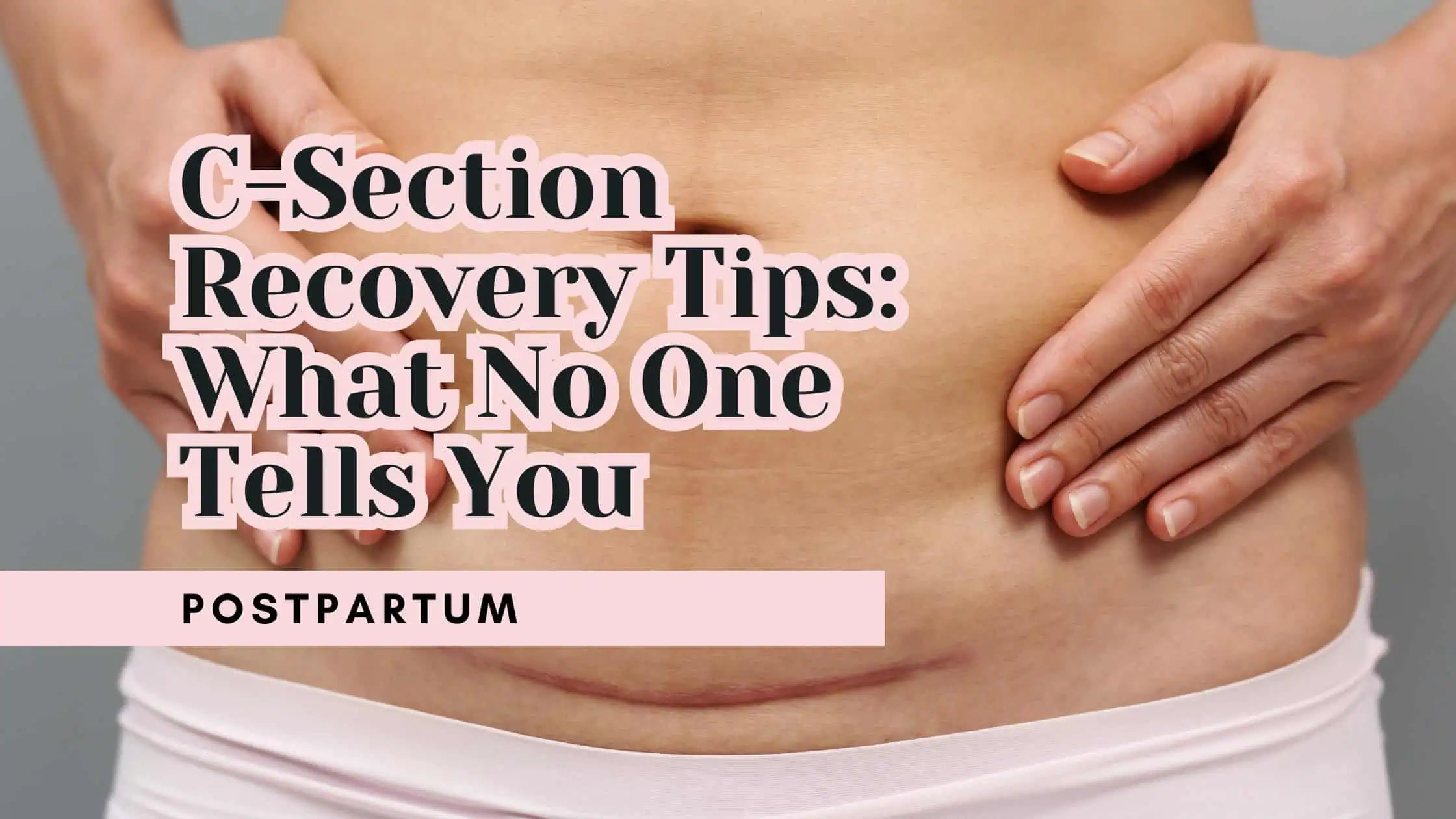
C-Section Recovery Tips: What No One Tells You
(Hey! Some links in this post may be affiliate links — meaning I may earn a small commission if you buy through them, at no extra cost to you. As an Amazon Associate, I earn from qualifying purchases. I only share products I genuinely love and think you’ll find useful too. Read the full disclosure here).
You’re lying in the recovery room, and someone just pressed on your abdomen like they’re testing a mattress for firmness. You weren’t ready for that. Or for how hard it’d be to laugh without holding a pillow to your belly. Or that standing up straight would feel like an impossible yoga pose for days.
C-section recovery is full of these little surprises — the stuff that doesn’t make it into the hospital handouts. Let’s talk about what actually happens and how to make it easier on yourself.
📌 Quick Checklist — Save This
- ✅Set up a recovery station with everything at arm’s reach
- ✅Stock up on high-waisted underwear and loose dresses
- ✅Practice the log-roll method before you need to get up
- ✅Keep a small pillow nearby for coughing and sneezing
- ✅Ask for stool softeners before you leave the hospital
- ✅Schedule someone to help with stairs for the first week
- ✅Watch for signs of infection: fever, redness, unusual drainage
The First 24 Hours After Your C-Section
That catheter’s coming out sooner than you think — usually within 12-18 hours. And yes, you’ll need to get up and walk shortly after. It feels impossible, but it genuinely helps with gas pain and circulation.
Here’s what nobody mentions: the shaking. Your body might tremble uncontrollably right after surgery. It’s a normal reaction to anesthesia and adrenaline, not a sign something’s wrong. Ask for warm blankets.
The nurses will press on your abdomen regularly to check your uterus. It’s uncomfortable, but it’s quick. Breathe through it, and don’t try to be stoic — if you need a minute, say so.
Getting Out of Bed Without Crying
The log-roll method is your new best friend. Roll onto your side first, then use your arms to push yourself up while swinging your legs off the bed. Never try to sit straight up from lying flat — that’s using your core, and your core just got sliced through.
Keep the bed at a height where your feet touch the floor when you’re sitting. Too high or too low makes everything harder.
C-Section Recovery at Home: The Real Timeline
Week one feels like you’re moving through honey. Everything takes longer than it should. You can’t pick up anything heavier than your baby, which means no laundry baskets, no toddlers, no grocery bags.
By week two, you’ll feel deceptively better. This is when people overdo it and end up back on the couch. Don’t reorganize closets. Don’t host visitors who expect you to entertain them. Don’t prove anything to anyone.
Week three through six is when you’ll start feeling more like yourself, but you’re still healing internally. Your scar might feel numb, tingly, or itchy — all normal. Some women feel pulling sensations when they move certain ways for months afterward.

What to Wear During C-Section Recovery
Forget your pre-pregnancy jeans. Forget regular postpartum underwear. You need things that won’t touch your incision.
High-waisted underwear that comes up above your scar is non-negotiable. The granny panties everyone jokes about? They’re not funny — they’re functional. Cotton, stretchy, and a size up from normal.
Dresses and nightgowns are easier than pants for the first two weeks. No waistbands to navigate, nothing to pull up and down carefully. Bonus: easier for nursing or pumping.
If you’re wearing pants, try maternity leggings with a high, soft waistband. They’re designed for a sensitive belly, which is exactly what you have right now.
Managing Pain After a C-Section
Take your pain medication on schedule, not when it gets unbearable. Staying ahead of pain is easier than catching up to it. Set alarms if you need to.
You’ll likely get a prescription for something stronger and instructions to alternate it with ibuprofen. Keep a little chart on your phone — it’s surprisingly easy to forget what you took when you’re running on three hours of sleep.
Gas pain can be worse than incision pain. Walk as much as you can manage (even just around your bedroom). Drink peppermint tea. Avoid straws — they make you swallow air, which makes gas worse.
The Cough-and-Sneeze Situation
Nobody warns you about this until it happens: coughing and sneezing feel like your incision might split open. It won’t, but you’ll want to brace yourself anyway.
Keep a small pillow within reach at all times. When you feel a cough or sneeze coming, press the pillow firmly against your incision. It’s called “splinting,” and it actually helps.

C-Section Scar Care That Actually Works
For the first week or two, you’re just keeping it clean and dry. Pat it gently after showers — don’t rub. Let it air out when you can. If you have steri-strips, leave them alone until they fall off on their own.
Once you’re cleared by your doctor (usually around two weeks), you can start gentle scar massage. Use clean hands and a tiny bit of unscented lotion or vitamin E oil. Light circular motions help prevent adhesions and can reduce numbness over time.
Some women swear by silicone scar sheets. They’re pricey, but if you’re concerned about scarring, they can help flatten and fade the line. Start using them once the incision is fully closed and healed.
The Bathroom Situation Nobody Talks About
That first postpartum poop is intimidating after any birth, but with a c-section, you’re worried about your incision too. Here’s the truth: straining won’t pop your stitches, but it will hurt.
Start taking stool softeners in the hospital. Drink so much water you’re slightly annoyed by it. Eat fiber when you can stomach food. Prunes, oatmeal, and pears are your friends.
When it’s time, don’t hold your breath or push hard. Lean forward slightly, relax your pelvic floor, and let gravity do the work. Bring your phone — it might take a minute.
When to Actually Worry During C-Section Recovery
Most of recovery is uncomfortable but normal. But there are signs you shouldn’t ignore:
- Fever over 100.4°F — could indicate infection
- Incision that’s hot, red, swollen, or leaking — especially if it smells bad
- Heavy bleeding that soaks through a pad in an hour
- Pain that gets worse instead of better after the first few days
- Leg pain or swelling — could be a blood clot
Call your doctor’s office. That’s what they’re there for. Don’t wait until Monday if it’s Saturday and something feels wrong.

Setting Up Your C-Section Recovery Station
You’re going to be spending a lot of time in one spot. Make it work for you. Set up a station with everything you need within arm’s reach so you’re not getting up constantly.
Keep nearby: water bottle, snacks, phone charger, burp cloths, diapers, wipes, pain medication, nipple cream if you’re nursing, and the TV remote. A small basket or bedside caddy is perfect for this.
If you’re recovering on a couch or bed, have a few different spots ready. Sometimes you’ll want to change positions, and it helps to have options that don’t require climbing stairs.
What Partners and Helpers Need to Know
You can’t lift your toddler. You can’t vacuum. You can’t reach things on high shelves without pulling on your incision. You need help, and that’s not weakness — it’s surgery recovery.
The most useful help is the boring stuff: loading the dishwasher, folding laundry, holding the baby while you shower. Not advice, not hosting, not critiquing your recovery pace.
If someone asks what they can bring, say “dinner in a disposable container” or “a box of high-waisted underwear, size large.” Specific requests get better results than “oh, anything’s fine.”
🌸 Chill Moment
Recovery doesn’t look like bouncing back in a week or wearing regular jeans to your two-week checkup. It looks like moving slowly, asking for help, and not apologizing for either one.
Your one thing for today
Set a timer for your next dose of pain medication so you don’t accidentally tough it out longer than you need to.
Conclusion
There’s a moment in week three or four where you’ll laugh without holding a pillow first, and you’ll realize it didn’t hurt. That’s when you know you’re turning a corner.
Recovery isn’t linear, and it’s definitely not Instagrammable. Some days you’ll feel great, then you’ll overdo it and spend the next day back on the couch. That’s normal. Your body just did something major, and it needs time to knit itself back together — inside and out.
Save this for later — and if you’re looking for more real-talk postpartum support, check out our guides on postpartum bleeding and what to actually pack in your hospital bag. We’ve been there, and we’re here for the stuff nobody mentions until you’re living it.